Home > News > Industry News
Most red PE pipes are HDPE polyethylene pipes for mining. They come in two forms: fully‑red pipes and black pipes with red marking lines. Red serves as an industry warning color, differentiating them from water‑supply PE pipes with blue stripes and gas PE pipes with yellow stripes. Designed for harsh underground mine conditions, they comply with the special coal‑industry standard MT558.1‑2005.
Underground mines feature complex environments with flammable and explosive hazards such as gas and dust. Ordinary PE pipes cannot meet safety requirements. Formulated with special additives, red PE pipes deliver dual‑performance of flame retardancy and anti‑static property. They effectively reduce static electricity accumulation and resist sustained combustion when exposed to fire, complying with special mine safety regulations. They are widely applied for underground coal‑mine conveyance including water supply, drainage, compressed‑air delivery, shotcreting and gas drainage.
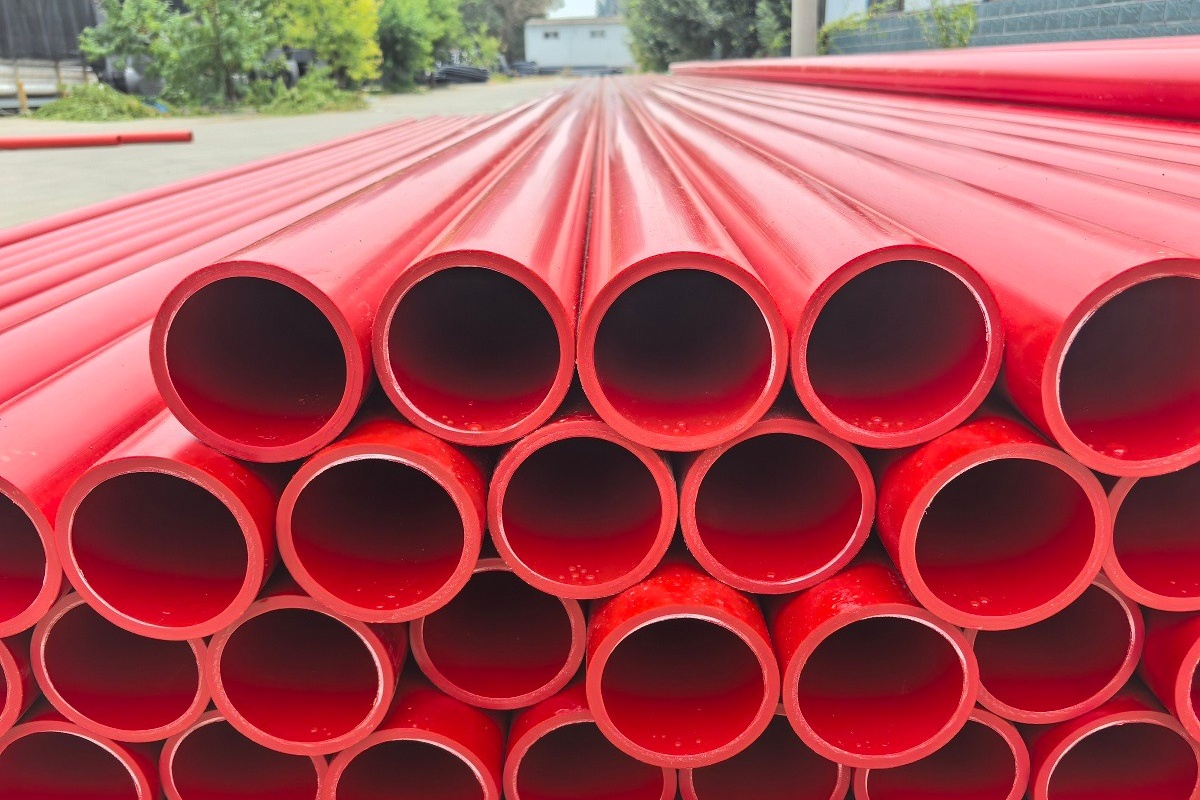
These pipes inherit the inherent advantages of HDPE material. They have excellent chemical stability, good acid and alkali resistance and outstanding wear resistance, superior to ordinary steel pipes. The pipe walls are hardly worn when transporting ore slurry and sewage. Light‑weight compared with steel pipes, they are easy to transport and install. Hot‑butt fusion welding produces firm and sealed joints to minimize underground water and gas leakage risks. They withstand stratum compression and settlement deformation. Under normal underground service conditions, their service life can exceed 20 years, greatly reducing later‑stage mine maintenance and replacement costs.
It should be noted that red mining PE pipes shall not be directly used as civil drinking‑water supply pipes. A small number of fully‑red PE‑RT underfloor heating pipes and red PE electrical conduit pipes are available on the market. These are special products for household heating and power systems, with completely different applications, formulas and standards from mining‑use red PE pipes. During procurement, please distinguish markings and implementation standards and select pipes according to working conditions to avoid safety risks caused by incorrect pipe selection.

Shijiazhuang Shentong provides high-quality HDPE, PPR, and PEX pipes for building, municipal, and industrial applications. OEM/ODM services, ISO-certified production, and export to 60+ countries. Request free samples today.
Luancheng District, Shijiazhuang City, Hebei Province.
Copyright © 2025 by Shijiazhuang Shentong Plastic Industry Co., Ltd. Privacy Policy
 EN

 Hot News