EN
EN

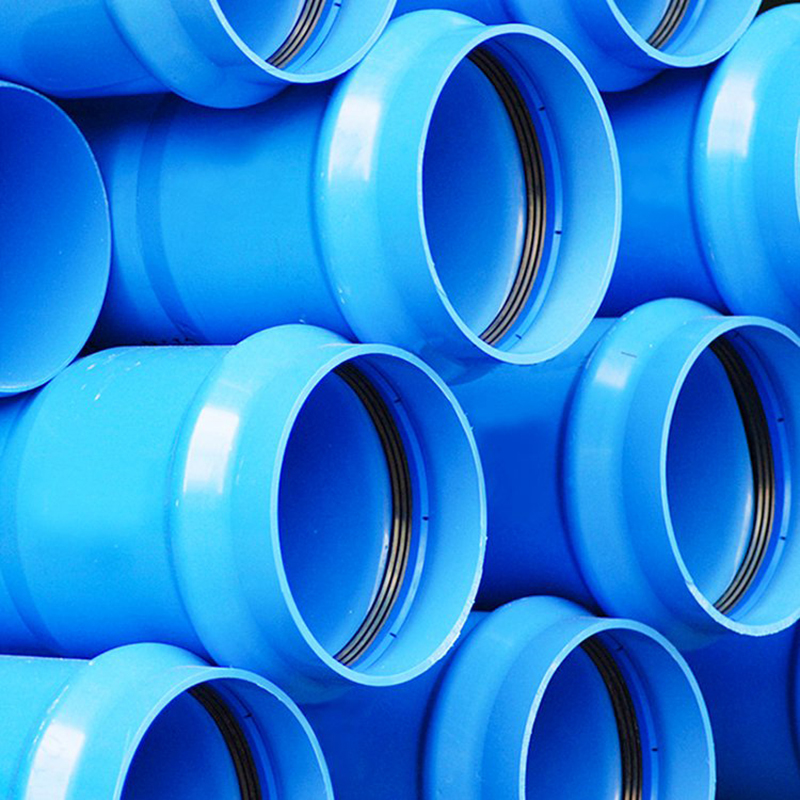
Chemical Inertness Through Molecular Composition
An unmodified version of polyvinyl chloride or simply uPVC has a stable molecular makeup that provides an advantage where chemical corrosion are concerned. In a chemical assault situation, there are strong covalent bonds of carbon-chlorine and carbon-carbon that are quite resistant. For metals that rust or corrode through a chemical and electrochemical processes, have a different fate when concerned with unmodified polyvinyl chloride (uPVC). For uPVC pipes, it has a unique characteristic of being chemically inert when it gets in contact with all sorts of industrial and municipal applications of uPVC. Such property allows the unmodified polyvinyl chloride pipes to retain their structural integrity when they are exposed to corrosive media. Unlike many plastic pipes, uPVC pipes do not have plasticizers and additives that leach and reduce structural integrity.
Corrosion Resistant Design
The pipes' design also plays a role in the corrosion resistance of the pipes. Quality uPVC pipes should be free of additives to retain structural integrity. To maintain the gradation of a high quality uPVC pipes, they should contain the unmodified polyvinyl chloride resin and the additives. These reputed manufacturers' quality systems design a means that help maintain the quality of the pipes. It should not be considered true that the pipes produced should not have any marketing name. Considering the pipes produced by FOSITE Conform to the Quality Management System (QMS) that is concerned with the internal control and discipline that is applied to ensure that the end product will have the minimal materials that could lead to corrosion. Pipes that have the unmodified polyvinyl chloride will definitely perform in a reliable and consistent manner when installed in the correct chemical.
Conformity to International Testing and Standards Authority
The testing performed by international authorities and the corroding capability of the chemicals proves that uPVC pipes perform well. Isolating the resistance of particular pipes in terms of chemicals and measuring their mechanical and dimensional stability are regulations set by ISO 4422 and EN 1401 1 and GB/ T 5836.1. These regulations set out specifications in terms of the swelling, breaking, or weakening of pipes. Industrial standards require that there be testing of the pipes and tubes to determine the pathways of the industrial chemicals. Provided are independent test results for the chemical resistance in pipes used for the industrial purposes. The standards f compliance show that the uPVC pipes are fit for the use in the satisfaction of the standards of protection against corrosion that are required in a worldwide basis.
Field Experience and Performance in the Real World
The fact that uPVC pipes have been used in many industries and in many places is proof of the fact that they have excellent resistance to corroding chemicals. In the field of wastewater treatment, the use of uPVC pipes has been environmentally friendly. The resistance of the pipes to the lowering of the alkali levels and the acidity levels in the chemical pipes is proof that it is environmentally friendly. The system used to irrigate the farm of the uPVC has improved is right thanks to its resistance to the chemicals soil borne. The use of pipes in the municipalities has demonstrated the ability of uPVC to last for years. FOSITE has provided pipes in the wastewater facility more than 60 countries and and has documented the longevity corroding resistance of materials in its wastewater.
Value of Corrosion Resistance from an Economic and Operational Perspective
When dealing with infrastructure projects, the excellent chemical corrosion resistance of uPVC pipes provides great economic and operational stability. Metal pipes typically succumb to rust and corrosion and, thus, require protective coatings or are need of frequent replacements. On the other hand, uPVC pipes do not need protective coatings and are structurally and functionally intact, requiring very little maintenance. This results in a decrease in life cycle costs, which includes costs associated with installation, repairs, and downtime. uPVC pipes have a smooth interior surface that does not allow scaling or biological growth. This preserves the efficiency of the pipe and thereby the flow and avoids the loss of performance associated with the corrosion of metal pipes. With all of the aforementioned benefits, it is clear that uPVC pipes are a cost-effective solution for any of your industrial, municipal, or commercial piping systems.
Supply and Manufacturing Reliability
When selecting a manufacturer for uPVC pipes, the manufacturer must be reputable. This ensures that the pipes will be corrosion resistant and that there will be high availability for the service of the project. Shentong is a well-known manufacturer with a reputation of having a high level of expertise due to over 30 years of experience in the manufacture of plastic pipes and having high level production systems. This allows Shentong to produce uPVC pipes that meet all of the stringent criteria in relation to resistance to specified chemicals. Shentong also provides the customer with different solution options and is supported by a highly sophisticated Level of system quality for sure control as well as global supply chain system.Shentong is a manufacturer with quality certified systems, so you can expect to receive uPVC pipe systems that are to the highest degree value. With high quality uPVC, you are sure to get excellent results from your projects and a high level of protection from chemical corrosion for many years.