Home > News > Industry News
Fluid transport systems involving PVC pipes and fittings can include everything from home plumbing to industrial drainage. Many users of this product may not realize that fluid flow and pipe size are closely interrelated. Pipe size and fluid flow are not arbitrary, and this flow can be key to the overall functionality of the PVC system. For cost-effective systems, flow efficiency and the size of the PVC pipes and fittings must be understood. Over the PVC systems overall lifetime, cost to the user will be impacted.
PVC pipes' dimensions, including diameter and wall, determine how well fluid flows through pipes. Greater inner diameters allows more fluid to flow through pipes without blockage. There could be blockage issues in high flow scenarios like big bulk drains or big water supply pipes. However, there is no blockage issues in lower flow situations like bathroom plumbing, so diameter is more cost and material efficient. People usually think wall thickness is only about pressure, but it actually influences fluid flow. Thick walled pipes, as long as they are manufactured well, will keep a consistent inner diameter because they won't be wobbly. In contrast, low quality pipes will be uneven, and those imperfections will hurt the flow of fluid. High quality PVC pipes are manufactured without gaps to ensure the flow is maintained.
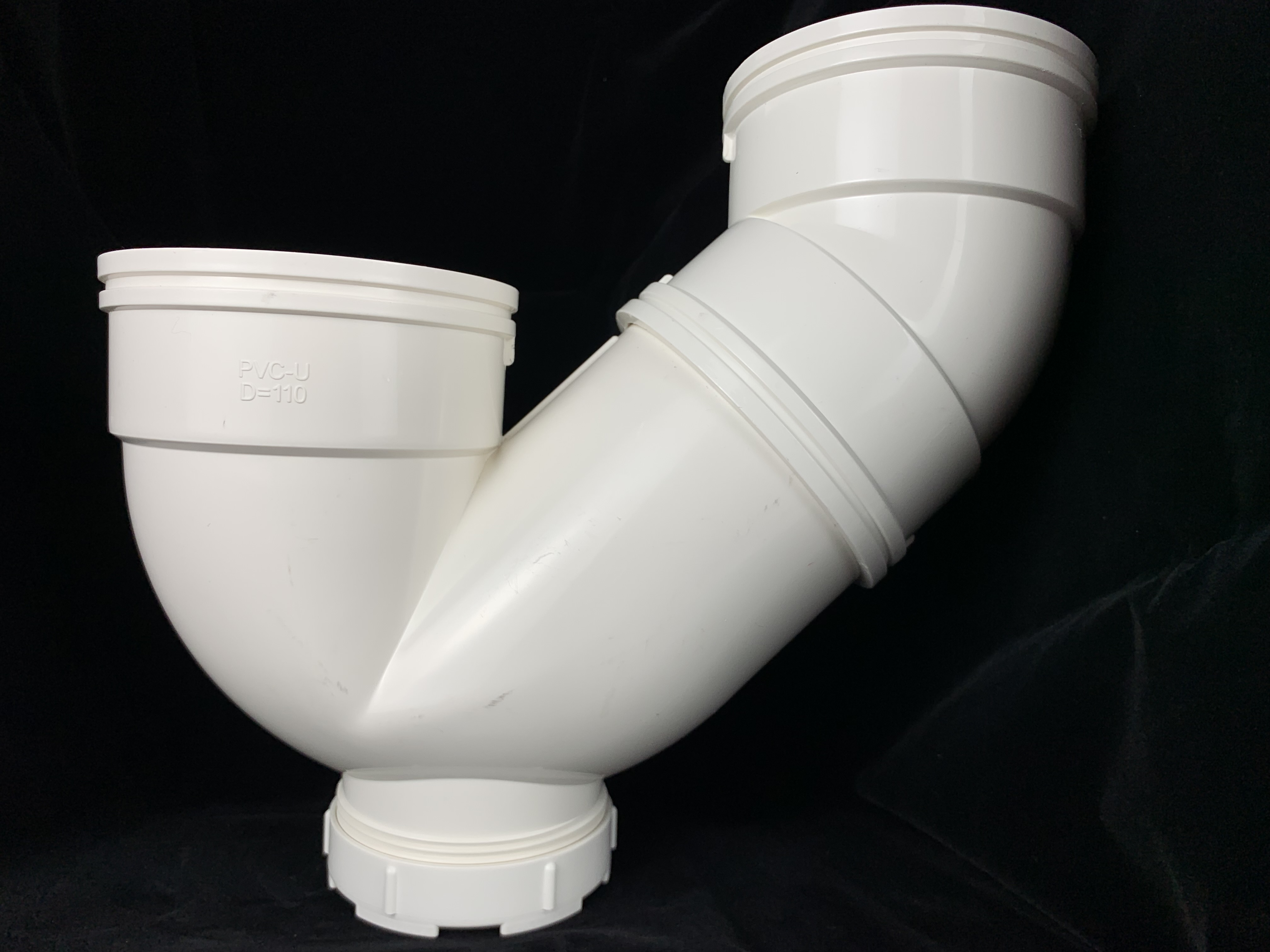
No one wants to deal with a PVC pipe problem, so for starters, it is important to know the possible challenges that could come from having the wrong PVC diameter. For one, smaller diameter pipes will allow the same fluid to flow through, but it will do so at a higher velocity, which increases the frictional drag that the fluid will exert on the pipe wall. In the long run, that will decrease flow efficiency and accelerate wear on the pipe's inner surface. This will lead to a leaky system when the outer wall of the pipe is reached. On the other hand, having a larger diameter pipe, when it is not needed, will cause fluid stagnation that can lead to system contamination and it is a waste of money to use larger pipes when not needed. In addition, a common oversight problem occurs when there is a pipe and fitting dimension mismatch, which can cause overlapping interfacing joints. When this occurs, the fitting will lead to leaky and ill-fitting unions that will create a problem and, with that, will lead to excessive maintenance costs. In other words, the system will become uneconomically efficient.
For PVC pipes, dimension precision correlates directly with product quality and must go hand in hand. Leading PVC pipe manufacturers exercise strict quality control in production of PVC pipes. Quality control ensures that every pipe produced meets standards in terms of diameter, wall thickness, and length. But this precision is more than just technical spec noting, as it directly affects the durability and reliability of the pipe. Pipes of correct and consistent dimensions are able to soport the intended fluid pressure without deformation, as deformation increases the chances of a pipe burst or crack. Furthermore, in drainage systems and plumbing, pipes of correct and consistent inner diameters are able to provide a smooth flowing of fluids even with debris in the fluid, thereby preventing clogging of the drainage. Apart from this, high quality PVC pipes of correct dimensions also maintain a smooth-flowing system with the pipe and fitting, thereby preventing leakage with a well tight fitting. Reliability is therefore achieved from the dimension precision and product quality as pipes maintain a high expected functionality thereby saving the consumers from the negative consequences of substandard pipes.
Optimizing dimensions of PVC pipes has a lot of profitability and cost effective values. In the immediate future, having the right dimensions avoids over-sizing and saves the costs of extra material that will not add to performance. In the distant future, the usage of maintenance-free, replacement pipes saves money. A system that allows the fluids flowed to pass freely will not have clogs, leaks, or breakdown and will not use a lot repairs or continuous downtime. This supports and convinces the business that operational costs will be lower with a system that supports higher productivity. Furthermore, pipes that work with their efficiency to fuel systems with pumps save a lot of energy in their properly sized system and work to lower the pumps energy consumption as lower costs of energy will be seen. Having accurate dimensions then makes PVC pipes with 100% raw material usage and high quality, preserve their service lifetime and increase return on investment. Cost effectiveness is driven from the optimization of dimensions and is the balance of future value and present savings.
Picking the best size PVC pipe will be based off the scenario given, for drainage in the home like in kitchens and bathrooms, the designed diameter is 110mm as that works perfectly. This is due to the fact that they only need to walk moderate fluid flow; and also because they fit into smaller confined space. In the industrial drainage systems, their diameter is larger as we are dealing with larger, and even at times debri, fluid flows as to have an unobstructed drainage. Concerning to water systems, the needed dimension will be based off what the needed water pressure and flow rate is, for higher pressure needed applications the pipe will need thicker walls, along with larger diameter for stability. We also need to take into consideration the drainage systems future expansion needs, because of this, a pipe diameter bigger than the current requirements will be needed in order to be able to have an increased flow rate without having to do a complete system upgrade in the future. Following the industry guidelines will help provide an accurate dimension based off the fluid type; rate of flow; and the environment of the installation system.
More than basic numbers, PVC pipe dimensions interconnect performance, quality, and price efficiency. With the right dimensions, fluid flow becomes efficient, costly issues become mitigated and the value of the investment becomes maximized. By avoiding costly issues PVC the right dimensioned pipes makes fluid transporting PVC systems low? Opaque and stable. Knowing the relationship between performance, quality, and cost of PVC pipes and fluid transport flow, makes the value of the optimized system within easy reach. This also holds true for residential, commercial, and industrial systems.

Shijiazhuang Shentong provides high-quality HDPE, PPR, and PEX pipes for building, municipal, and industrial applications. OEM/ODM services, ISO-certified production, and export to 60+ countries. Request free samples today.
Luancheng District, Shijiazhuang City, Hebei Province.
Copyright © 2025 by Shijiazhuang Shentong Plastic Industry Co., Ltd. Privacy Policy
 EN
EN
 Hot News